
I think I am lucky for the ways my brain is so bizarre. I think it was just happenstance, a strange twist of fate, or perhaps karmic compensation for all the ways it felt broken all those shaping years. Whatever the case may be, it happened without any announcement or anything remotely close to fanfare, really, it just happened like it was inevitable and meant to be this way. I just one day realized I had never once been waiting for my childhood to explain itself to me. More, to apologize.
This was an unceremonious thing, one devoid of resolution or a moment where a light-bulb went off and suddenly everything I’d been through just made sense. There was just a day I understood, and it was quiet, and it was beautiful.
Someone emailed and asked me a question recently about my late diagnosis of Autism, asked how it affected me as I looked backwards, and explained that they too were diagnosed late, that they too went years and years without the label or the explanation that accompanies it. Bitter, they felt, angry. They wanted an apology, I think more than most things, they wanted justice for all that aching.
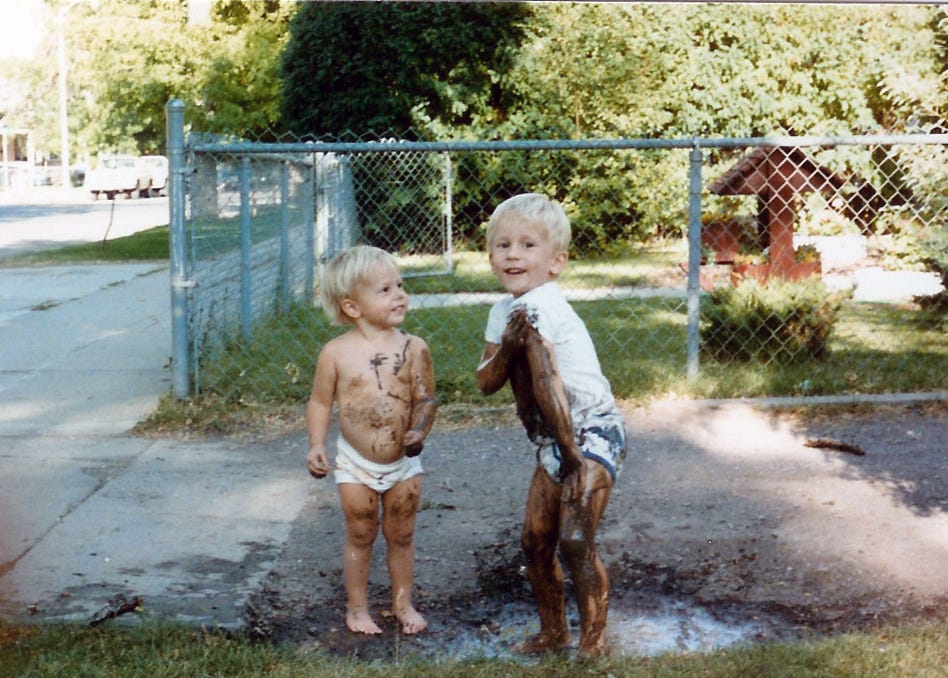
I look at the me in the photo above, the little version smearing mud on my arms in my all white t-shirt and He-Man underoos, the impish smile because I can almost guarantee my Mom, behind the lens, was telling me to not smear mud any higher up, and I once again feel that beautiful quiet, that understanding that I cannot go back and change a single thing about the childhood I came through. The good, the bad, the tough, the simple, the lovely, the joyful, the sorrow-soaked. I cannot, and there is a strange peace in it for me.
I read a quote recently that said quite eloquently, “Forgiveness means giving up all hope for a better past.” I think this is that. I think it’s always been that.
I remember the birthday parties in classrooms as a child, the little version of me that refused to eat anything that was made by anyone other than my own Mom. I remember being teased for never trying the plates of brownies or cookies, the strange casseroles in long tupperware containers, the hamburgers grilled at school picnic days. I remember finding reasons to fake sickness on the days of field trips, to pretend I was my own father and call myself out to the office in high school. I remember the teachers that sent me to the principal’s office, the counselors that told me I couldn’t possibly earn the grades I was getting, so I must be cheating. I remember feeling broken in more ways than whole, that I never quite fit.
I remember the February mornings my Dad would have to leave for Spring Training, each year like clockwork the 6am flight to Salt Lake City he’d have to take to join a new baseball team for a new season somewhere far warmer than Montana. I remember the slog through the second half of a school year until we could finally go join him.
I remember the sorrow that struck my family like a freight train when a drama that I’ll leave unspoken hit us when I was just in middle school. I remember the year or two that followed and the feeling of such fracture inside the four walls I’d only known as haven.
I remember the good memories too, so many I cannot speak of them here lest you’d stay months and months, but somehow I think we are creatures that forget joy faster than we do heartache.
So how then to answer the email I received, how then to address a very real, very heavy question from someone who, like me, was not diagnosed until late in life and felt the full weight of that injustice? What of those that had even harder childhoods than this, those who endured abuse or isolation, neglect or loss?
With honesty, with a little bit of tenderness.
I told her that I did not believe there was ever true closure for the way we were treated as children. That we cannot unbreak the egg once cracked, we cannot erase the heartache or the hurt, the days that were more unfair than anything else. I told her what I knew: That childhood cannot apologize to us. That we believe there exists a door, and we spend our lifetimes waiting for it to open. There is no door, there is no opening. There is wall where we imagine handle.
Waiting, I told her, is the cost, and it’s too much to pay. Waiting is the wound, maybe even more so than the wound itself. I have no idea if what I said helped, I often feel that nothing I say really can, that maybe it’s just the fact that someone, somewhere is willing to listen and try that matters. I meant it though, and it was truth as I knew it. Sometimes that’s all we can do.
I found a lightness in my refusal to wait, whether it was my own brain doing it of its own accord to protect me, or if it was something I unearthed with a hell of a lot of practice I know not, but I found it, and it changed everything. I could not carry the weight of what I could not change, not any longer, not any further, and so I set it down.
The things I endured, the tough bits scattered through an ordinary life filled with a million bits of a million different colors and emotions, shaped me into this person, this me who tries and listens and shows up and cares and responds to emails from strangers because I have felt what they feel. That everyone is just doing the best they can, and no matter how hard I try, they try, we cannot change what has already been done.
I see me, mud-stained and grinning like a little brat at a woman who was both taking a photograph and trying her best to navigate life with a kid like me, a kid who saw the world different, who faced challenges the other two kids she had didn’t, who asked a billion and a half questions, who needed to skip school and hated the hustle and bustle of parties. I see the kid who was a handful of years away from going through a family trauma that shook and shaped, that unsettled and set fire to the life we all knew. I see a kid who would turn into this me, and I remember again what I remembered the day I was emailed:
There will never be an apology from our childhoods, from our traumas, from our pain. Waiting for it is scratching a scab off every time it forms because you wish you never received the cut. Waiting doesn’t just delay the healing, it becomes the wound.
I see me, I see the mud, and I suppose I understand.
I love you all.
Be good.

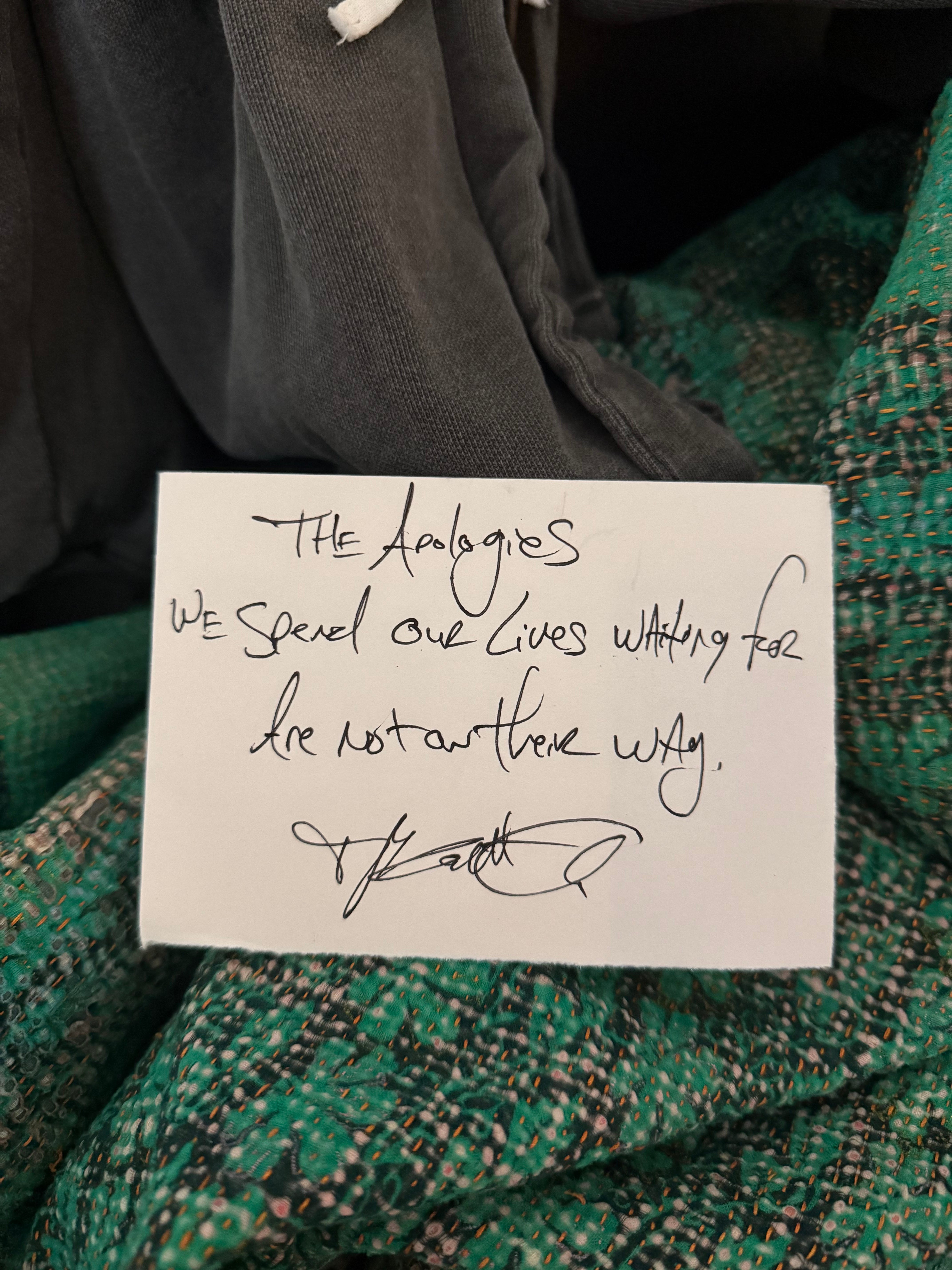
The apologies
we spend our lives waiting for
are not on their way.