
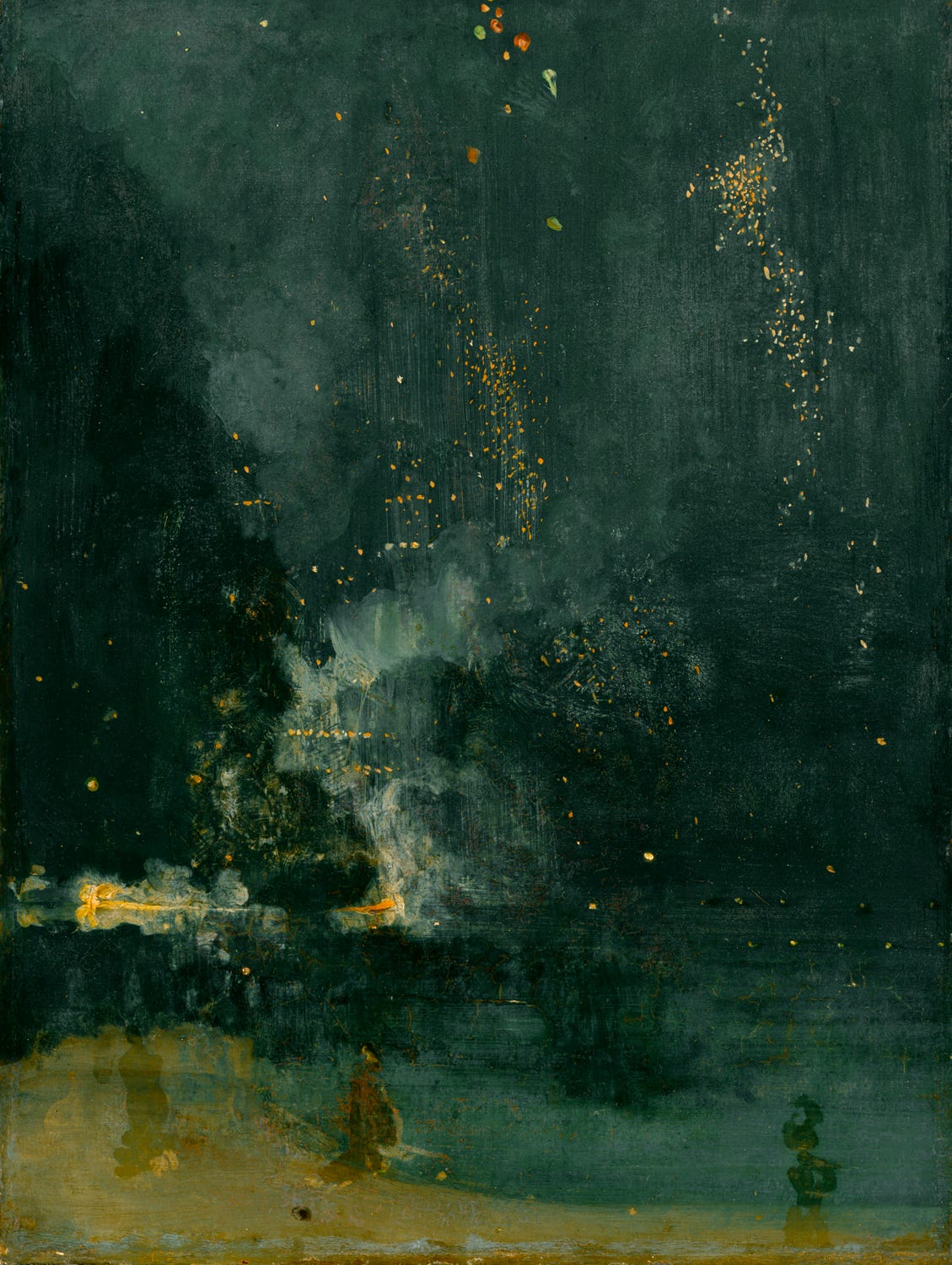
They knew then, as they created what would one day be called masterpiece, that the green would never stay. They knew, that all beauty must eventually fall away.
To make any art is an attempt to defy mortality. To put forth into this world some piece of ourselves, to paint it, to write it, to sculpt or photograph it into existence is to speak to time in a whisper, is to deny it with some soft violence.
We do this, though we know that it, like we, must fade.
Rewind the clock, peer back into the 1500s, see a painter scraping copper plates hung above vats of boiling vinegar, of wine dregs, of grape skins gone to rot. See the mix and the stir, see the strange green not-quite-turquoise hue emerge, see it named verdigris and see it shine like ocean light bottled, like a sea when a storm finally passes.
See it spread across a canvas stretched, see the deft hands with careful precision apply it thoughtfully, see the work emerge, like Polaroid after the shaking. See this attempt to disregard that mortality we all fight to delay, but see more than all things, the irony in doing this, for more than any color on that painter’s palette, verdigris would one day fade, would one day dull, would one day turn back to the muddied water of puddle on street, to brown on the edge of black. Verdigris was toxic, verdigris was temporary, verdigris was stunningly beautiful. It is, still.
Why then, beyond accessibility and cost, would some of the greatest artists of all time choose to use a color that would directly contradict the immortality they sought? Why would they paint with a shade that they knew with certainty would fall away and turn muted and bland? Why choose something so impermanent?
Perhaps because true beauty is never meant to last. Perhaps it’s so beautiful because we know it never will.
Don’t we all create with materials we know will fail us? Don’t we do this in nearly every aspect of this short and fleeting life? We enter relationships with those we know must one day leave, be it in death or divide. We have children and spend every drop of our energy and care in raising them to leave us one day, to grow brave enough to do the same if they wish to. Our tattoos go green-grey and soften, our photographs yellow at the edges, our voices change, our statues rust and grow green in the sea-spray. And us. And Us! Every single version of ourselves, every cell in our bodies grows and shifts and morphs and undergoes its own oxidation into something fresh. Every 7 years, they say, we’re entirely made new. Our memories too, those we cherish and hold after the things we’ve done, don’t they fade into something else? Don’t they become muddled and eventually opaque? Don’t we love the silhouettes of them all the same?
What of our art? What of the poems, the photographs, even the newsletters I create? I write to you, for you, day in and day out, though one day you will not be here, nor I alongside you. I write for someone who will one day be gone, who will one day fail to remember. I write in letters, and imagine them that oceanlight hued, I imagine them fading into something else long after I am gone. All is impermanent, all is ephemeral, all is verdigris. We are.
I chose the painting I did for the cover of my latest book, The Never Was, because of that color, because Whistler knew in creating what would become my favorite piece, that it too would fade. Because it was its own “Never Was” that never would be the same.
Everything we make, we make knowing it will not stay the same. Everything we love, disappears far faster than we’re ready for. Everything we build will be ruined by time. Still we make, still we love, still we build, and hold hope in the process of our creation.
Perhaps verdigris is the physical embodiment of my silly little book, its representation for all those with sight to see it. All we never finish, all we do and know will not stay that way for long. Perhaps.
How beautiful, this. How stunning and devastating that those painters knew the green they splashed on their canvases as not the green anyone later would, or could see. That they chose a color already becoming, the instant they mixed it, something new. Isn’t that life? Isn’t that us?
Aren’t we so much more beautiful because we are already on the way to fading into something else?
I don’t believe beauty was ever meant to be for permanency, I don’t believe it’s a stagnant force. I believe it magic that nothing ever stays the same way, that we cannot ever step in the same river twice, as Heraclitus said.
Verdigris was the reminder to them all, from Titian to Raphael, da Vinci to Botticelli, Bosch to Whistler to create the work despite the oncoming tide, the rush of time that would erase them, erase the fabric and the paint, the sinew and the bone, quicker than any were prepared for. Make it, anyway. Love it, anyway.
Time will steal the color, it always does, but until then we get to stop, we get to stare, we get to feel our jaws slacken as we stare into the blue-green-grey-sunlight-on-ocean-calm color that steals our breath. We get to see it, we get to experience it, and above all, we get to love it, while it lasts.
We are nothing if not impermanent, but we are here, now, for a time. We must make what we’re called to make, we must love what we’re called to love. Not because it will last, but because it won’t.
Every single thing we are is already becoming something else. Maybe that’s the point.
The fade has begun.
What we choose to do while it is happening, that is the part we still get to decide.