
There’s a weight to resentment, but I don’t know where we carry it. It just is. It exists in you, around you, like a weight vest but invisible, it settles into the empty spaces around your organs, it sits on your ribcage like it knows nothing of gravity. It compresses your breath, I know it does this, I’ve felt it do this. Each laborious inhale, each abbreviated exhale, each staccato breath and choking for air.
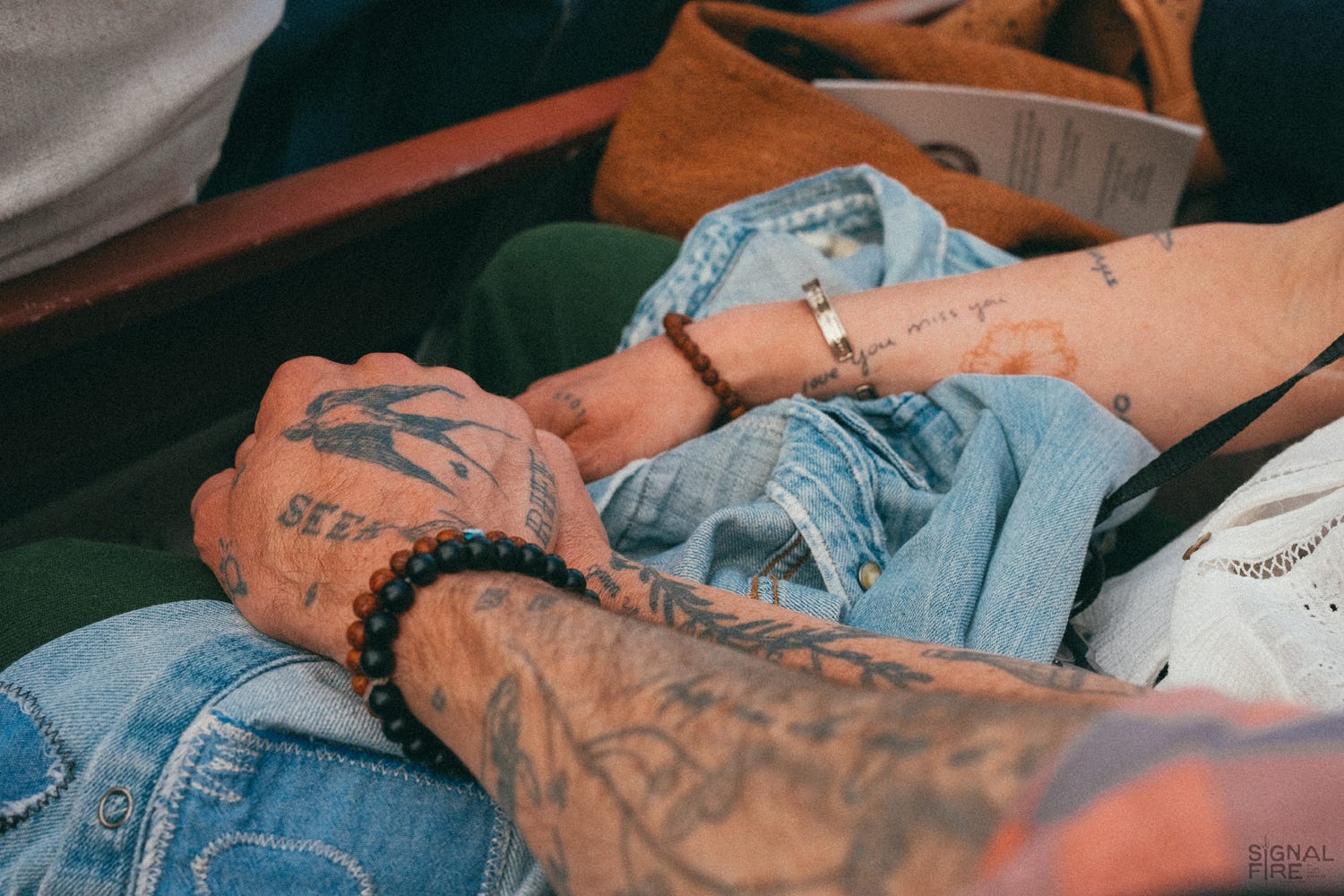
I think hands feel it too, they curl from fingers to fists when it returns, and return it can and will and does more often than you think it should or wish it could. It aches them, throbs like they’ve been used too often, like they’ve hit something hard too long. It comes back when you’re washing dishes or folding laundry, when you lift some item of food off a shelf in an otherwise empty aisle in the grocery store and you spot someone that makes you want to hide inside the boxes of mac and cheese or cereal you choose from. Old anger, the one you thought you’d let go of, the one you invented ceremony to rid yourself of. There it is, staring you in the face next to the boxes of Kraft, making hands into balls and stabbing at your lungs.
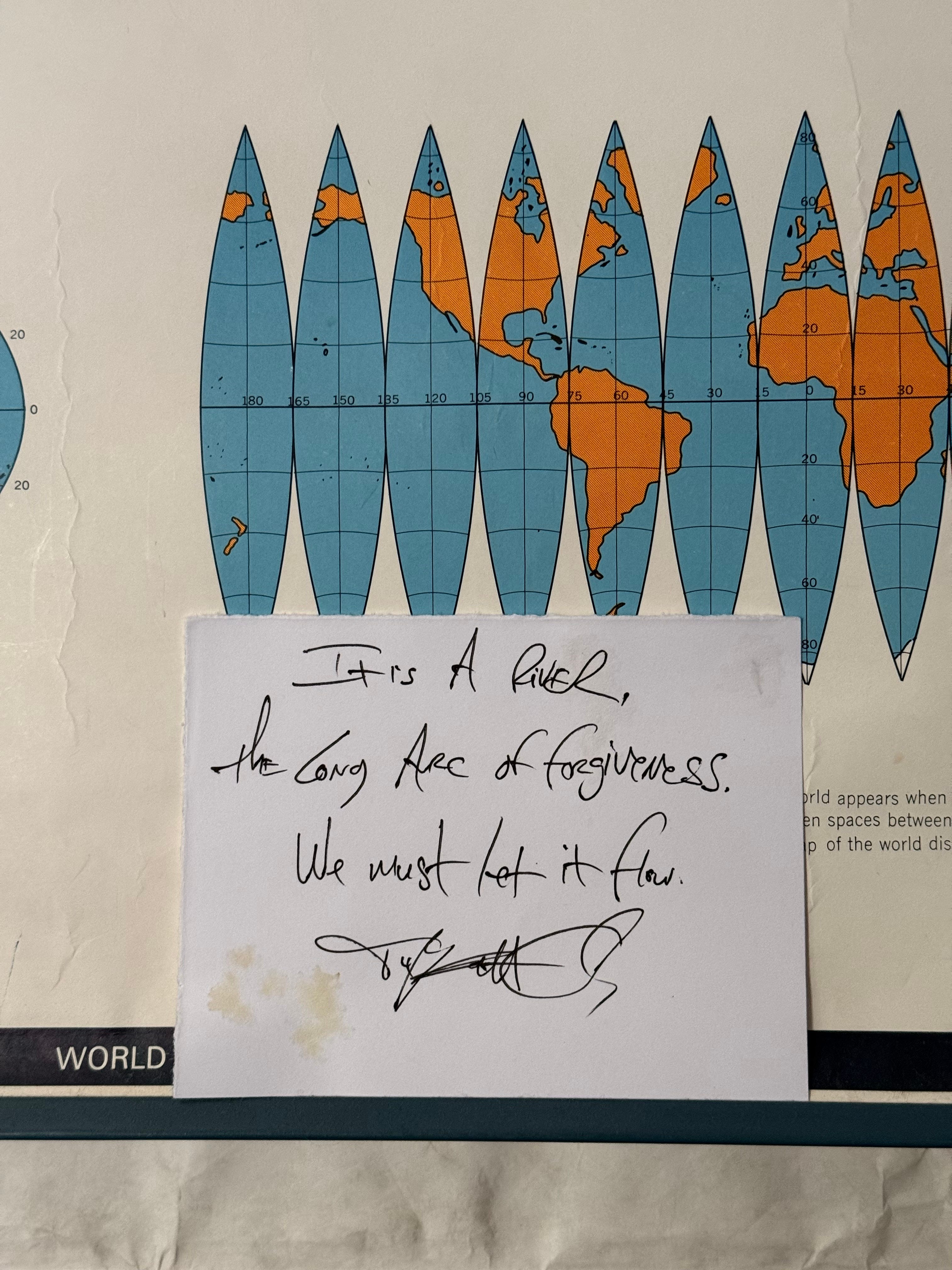
Forgiveness is not an event, it’s not a door to be walked through, a single weight to set down and never again picked up. It’s not the single crossing of a river.
I spoke at length last week about the childhoods we carry, about the courage to finally stop waiting for an apology from it that will never, ever come. Stopping the wait and truly letting go are not the same thing, and I don’t think they ever have been.
I realized this with a bit off gut-punch profundity a few months ago when Sarah and I sat down and watched the HBO mini-series called Task. It felt like the chest squish I spoke of above, it felt like the hands throbbing from curling into themselves. Hopefully it’s been out long enough that what I say below is not a spoiler, but I’ll give fair warning in case you haven’t seen and wish to see, I speak of final scenes and resolutions ahead.
At the end, there’s this heartbreaking and heartwarming scene where Mark Ruffalo’s character gives a speech in a courtroom, to the judge, but really to his son. His son who broke everything in his life, every bit of magic and joy. His son who upended all things, who stole what can never be returned. In his speech, he forgives, and every piece of me felt it when the two characters finally looked at each other and didn’t look away. Forgives. Not with conditions or if thans, just forgives. Just releases them both from the burden of something held so long they both forgot a life without it on their shoulders.
The burden of years, of time, of the astonishing reality of how much time it takes to reach this point, to truly set it down.
I see resentment cloak itself in the colors of protection, see it build castle walls around our hearts, dig a moat around those. I see the grievances I’ve held in my life sneak in wearing the costume of love, because in the end it seeks to protect me from what comes after the release. After the setting down.
It’s fear, in the end, that locks us to our own resentments, to the inability to truly let go. Fear that if we do, it’s almost like saying that what happened to us, what was done to us, was ok. It never was ok. It will never be ok.
I’ve tricked myself, too. Thought I’d learned my lesson, thought I’d finally understood the true meaning of forgiveness. I thought I’d uncovered the reality that there is such a difference between forgiving the person, and forgiving the story behind them. What of people that have gone? Those who have died, moved on, changed, repented? Forgiveness offered them, maybe willingly, maybe in the haze of no other real choice. What remains, however, what stays in the room with you, what rides on the shoulders or ties itself to the back of your clothes as you try to outrun it, is the story that’s been built around what they did. What was done to you.
The person has been forgiven, the story has not.
The story is what is clung to, the story is what is repeated so many times it almost tells itself. The same beats, the same explanations, the same breathless recounting, complete with the false resolution the arc tries to promise.
There is a peace in this, if for a time. There is a relief that comes as step one has been completed, the person has been forgiven, let off the hook. That it’s all good and no worries and water under the bridge and any number of aphorisms offered up to show how cool we are about letting things go. Until a song comes on that reminds us, until that person is spotted in a grocery store completely oblivious to the strife they have caused, the havoc wreaked. Until those fingers become fists again, the thumping in the chest returns. This is when we learn, true forgiveness is not absolution gifted to another, it’s freedom given back to ourselves.
A gap exists, and watching Task reminded me of it, between forgiveness performed and forgiveness that roots itself in the body, in the soul, in the life led. There is exhaustion in repeating the same things time and again, in the hiding in grocery store aisles, in the telling and retelling of the same stories to any ear that will listen. The gesture is not the work, the words are not the key to the door that we’ve locked in ourselves.
Mark Ruffalo’s character stood before a judge and spoke words of forgiveness that had taken years and years to grow in him. There are beats of silence after he does this, the camera refusing to cut away. A mountain of history between two people, and one decides to put it away. The other is clueless as to what to do with that forgiveness. What to do after the courtroom has been walked out of, after the returning to the home once shared. What to do when the sun rises on a new day. The work of it all. The true work.
To write a new story with all new words.
To fill our carts in aisles we no longer hide in. To drop the mac and cheese and never again look over our shoulder to see who is walking towards us, who walks away.
To breathe until lungs expand and the weight lifts and it’s not painful to inhale once more.
To uncurl our fists and let them be fingers once more.
I love you all.
Be good.