

The cursor blinks endlessly at the start of an unwritten email, the dots pulse on the text message you’re typing, then erasing, then typing again. The phone in the hand, thumb hovering just above the number, all you’ve left to do is tap it. The lump in the throat that rises, blocks all breath, and forces you to exit the visitation line at the funeral, the pew in the furthest back row. Every single thing feels too small, too shallow, too insignificant, we cannot possibly avoid the clumsiness of our efforts. Paralysis, or something decorated exactly like it.
I say this with confidence born from experience, experience born from countless sorrows, mine and those I love:
More than all things, it is the fear of saying the ‘wrong thing’ that makes us absent in all the moments where our presence matters most.
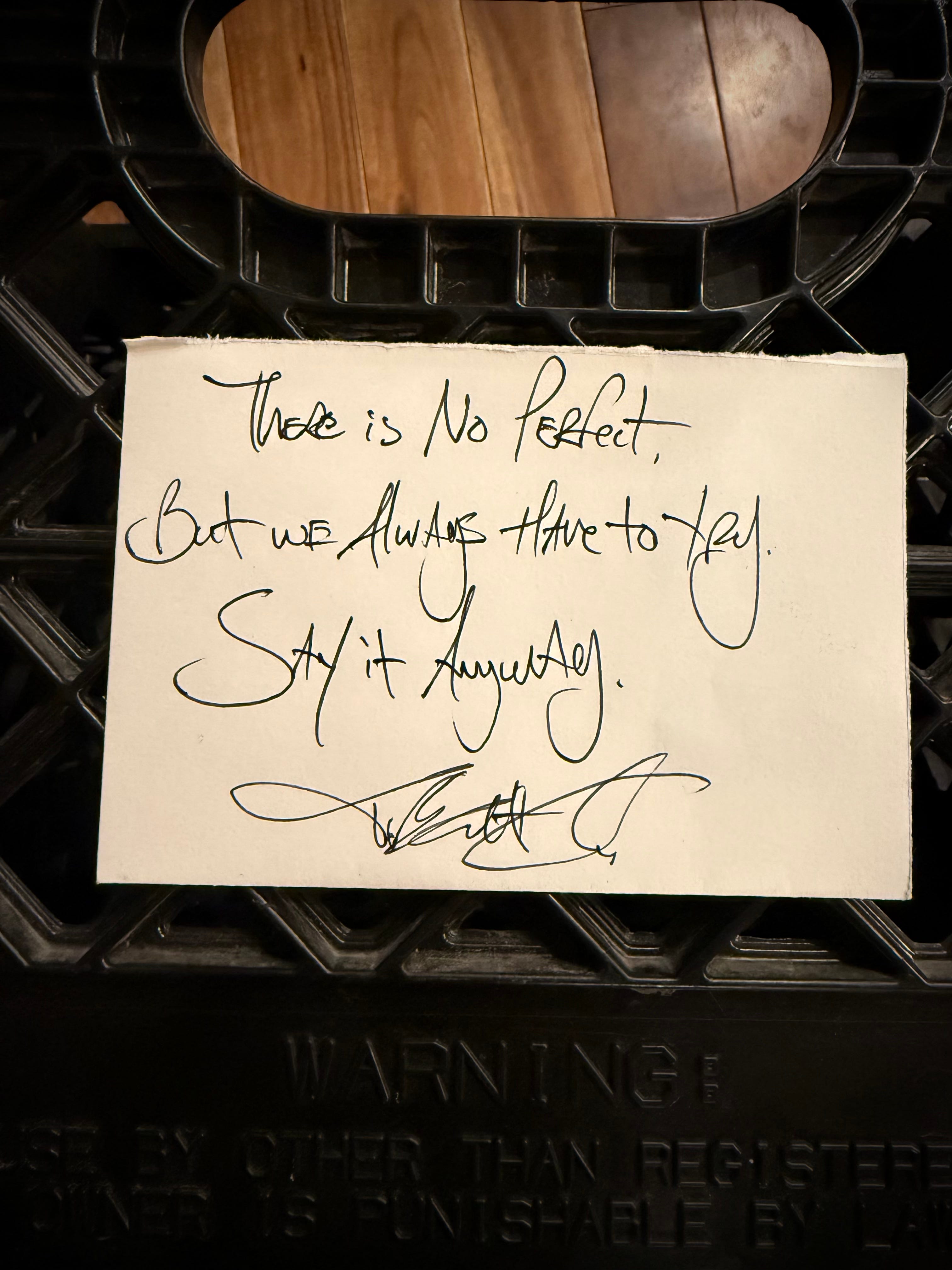
You’ll never say the right thing. This is the truth of it all. You’ll never find the perfect combination of words, of sentiments, of understanding laced with grace or something that so closely resembles necessary and required wisdom. You’ll never say the right thing, because there is no right thing.
There is no perfect, with grief.
We’ve been taught lies all this time and it matters little where we cast the blame for this deceit. We’ve been taught that there exists some magical combination of words or sentences that can dismantle the grief that someone experiences. We’ve been told that sometimes words can fix pain. We’ve been lied to, whispered into our desperate ears honey-flavored dishonesty that perfect is out there, we just have to find it, and when we cannot, that our silence is so much safer than that imperfection we’re forced into.
I know, with certainty, that silence does not protect those in pain, it does not somehow insulate them from it. Silence, leaves them alone with it.
These moments of ache, these throbbing gaps between silence and offering, are universal, and tragic in being so. We have all stood breathless and trembling, desperate to soothe but paralyzed with inaction, with amputated compassion. We have all searched the endless libraries of our minds for the “right” words, only to come up empty, only to choose nothing instead of some fumbling wrong.
Why do we do this? Why do we cower in the face of others’ sorrow? I have seen, with increasing regularity now that social media and its evils have spread like a virus across the empathy of this place, the “least we can do” become more than most will. I have seen thousands of “Likes” on tragic posts, without a single real phone call or conversation to actually offer true condolences. I have seen so many wait, and wait, and wait, for some idealized time where things calm down and the dust settles a bit and some imaginary grace finds its way to those who are suffering, before they finally try to actually help, if they try at all.
I’ve long believed that the most dangerous thing we can do for those we care for in crisis, is wait until we are ready to finally speak up.
Love lives here. Grace lives here. Empathy, compassion, understanding, all dwell in the hallowed walls of our intention. After all, it’s always been about the intent behind our actions, so much more so than the actions themselves, that define the humanity within us.
Love is sitting with someone you love, it’s holding their hand and letting them weep. Love is leaning in, love is consistency over eloquence, love is allowing the discomfort, it’s embracing it, it’s refusing to rush them through it no matter how much it itches, it stings, it burns. Love is “I’m thinking of you today,” it’s “I’d love to hear stories of them…” it’s “I don’t know exactly what to say, just that I’m here,” it’s “Don’t worrying about replying, I’ll keep checking in.” Love is intention.
Love is understanding that perfection is never the goal, only presence is.
It is fear, I double down and re-state. It’s always been the fear. It’s the fear of making things worse, it’s the fear of our own awkwardness, the fear of facing and confronting the pain we see in others. It’s fear of not truly getting what they’re going through, of seeming unfairly unaffected, it’s the comparison that thieves our power and replaces it with impotence. Those in grief do not judge our attempts, they do not grade our grammar or the language we choose to connect. Those in grief remember, only, those who showed up, those who stayed.
Grief will come, it always does, and I’ve written of this probably far too many times on this little Signal Fire. It comes and it stains the fabric of all things. It forces us into the very center of our own fears, both when we are the center and surrounded by it, and when we’re the fumbling planets that orbit around sorrow as another’s sun. Grief will come, it’s on the way as we speak, and so I write this to remind you all, to remind myself, that no one ever expects perfect words, that love requires no fluency in sadness or some assumed wisdom and supreme clarity of thought. Love is 99% being there, just being there, and trying has always mattered so much more than saying it all ‘right.’
The very worst thing you can say, the very worst thing you can possibly do, has always been, and will always be, nothing at all.
Speak your words, though they be not perfect, be for them who you needed them all to be for you when you were where they were. Think, aloud here if you wish, of a time that someone said the ‘wrong’ thing but it meant everything anyway. Tell me of the crappy casserole and shaking arms from your neighbor, tell me of the cheap beer or bag of fast food tacos, tell me of the hand you held and the reassurance that they, whoever they were, loved you and wouldn’t ever leave your side. Who showed up, even though they had no clue what to say? Who stayed, who reached out, who did more than Like the post on social media or responded with the crying emoji, and in doing so, reminded you that despite it all, hope remained?
If you’re reading this and you are struggling, tell us, let us find all the wrong words that just might somehow feel right. If you know of someone else, forward this to them, tell them you love them, it might be the most imperfectly wonderful thing they’ve been desperate to hear.
There is no perfect with grief. Turns out, there doesn’t have to be.
I ended the essay where I did, because that’s the truth as I do know it.
What I didn’t include, what I want to share with just you here in this amazing community, feels like more, and it feels a bit quieter than all the rest of the thoughts that led to this. The truth is:
We all still freeze in the face of such weight, of such sorrow. I still do. With my autism I don’t really ever feel burdened with the weight of what to say, but more, when to say it. I say things, hard truths, out loud and probably at the wrong time too often. Sarah has to corral me, reign me in, explain to me that Yes it was true, but No it wasn’t timed right. I struggle. A lot.
Knowing the truths I spilled above doesn’t make anything easier magically.
If you’re here, beyond the little paid veil, you probably know that already. About me. About you. About us.
What I am curious about, what I want to know, is how this shows up in your life. I want to know times you were sure you held in what you were so very sure were the wrong things, and gave silence instead. I want to know the beautiful times you weren’t sure, but reached, but spoke, but offered, anyway. When were you brave?
We are here to try, nothing more. To give, and give, and hope, and above all, just to try. In our efforts, compassion rests.
What was yours? What is holding you back from saying what you wish, what you need, to say? Tell us, practice here.
I love you all and I’ll see you next week.