



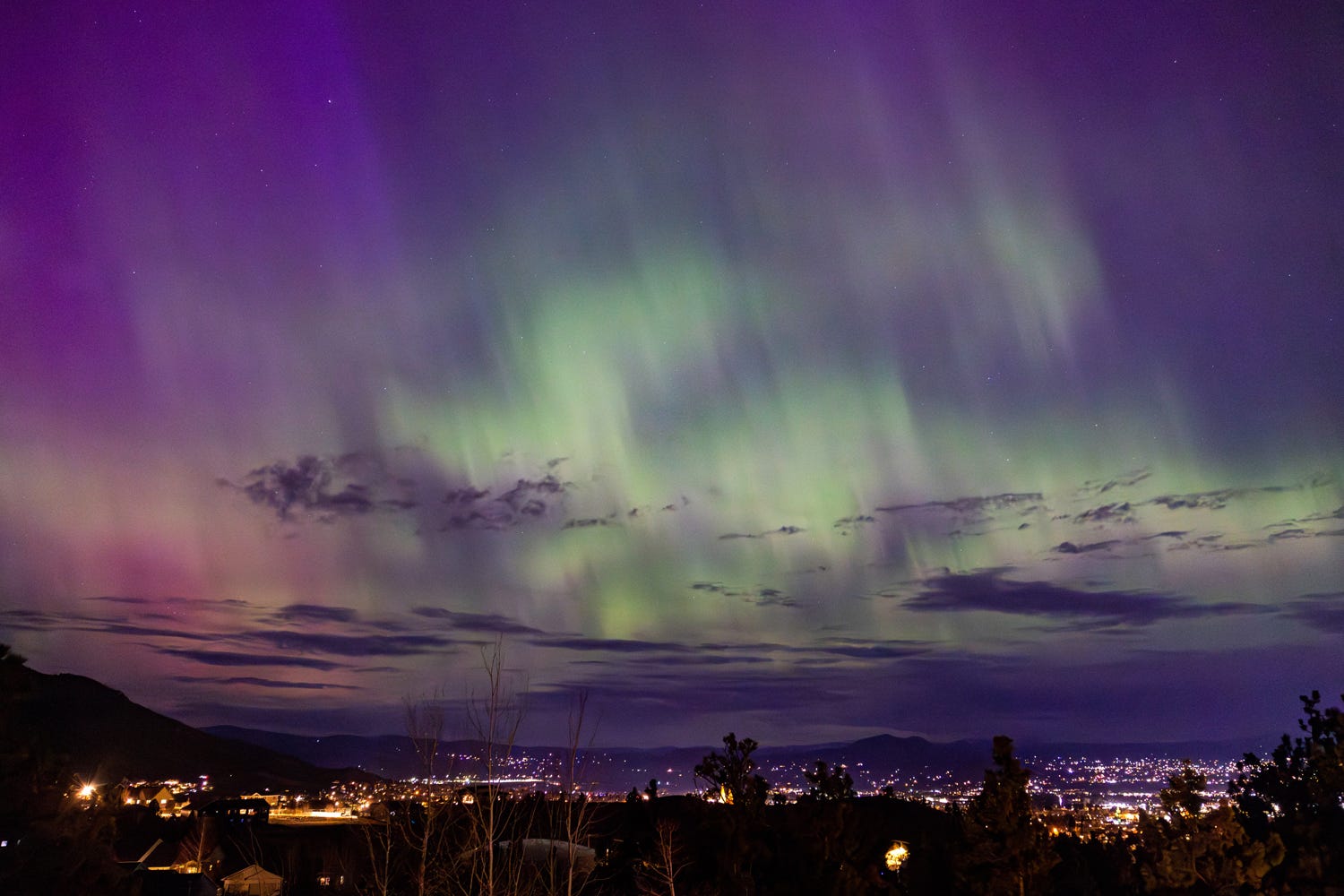
Once upon a time, you knew yourself as the entire universe.
Where you ended and the terrifyingly massive everything began was non-existent, you were it and it was you and newborn you had no idea about borders or boundaries, divisions between the starlight above and the starlight within.
You weren’t born knowing you were separate. You had to learn this. That should tell you something, whisper at a truth universal that becomes the first thing we ever forget:
We are born as one with the universe.
Somewhere along the way, we lose that, or at least we convince ourselves that we do. We begin believing the lie that we are told—by others, by experiences, by our own voices in secret languages no one else will understand—that all things are divided, that all things are separate and will always be this way.
In Buddhism, this separation is seen as the lie that it is. It’s called out, it’s defined, it’s warned against. The idea of Oneness is central to Buddhist beliefs, called anatta, it loosely translates to the idea of “no-self” or “non-self.” The idea, while much more complicated, can be reduced down to the idea that there does not exist a single, non-changing, permanent, “self” within living creatures. That nothing exists independently, including us. Everything arises from this collection of constantly changing parts: physical forms, feelings, mental formations, consciousness, and perceptions (These are called the five aggregates, but you don’t really need to know that unless you really want to).
I speak a lot about the causes of suffering in our lives on this Signal Fire. I’ve explained the Four Noble Truths, and how suffering is at the root of life, and while there are (and I’ve discussed them at length) a great many factors and causes for this suffering, the idea of “self” or “I” or “me” causes a great deal of it.
Why, you might ask? Simply, the clinging (attachment, see!) to that idea of a solid and un-changing “I” or “me” fights against the one common truth of constant, absolutely constant, change. This is impermanence, the central tenet of Buddhism.
So what then, do Buddhists say about this great cosmic disconnect? Do we say “We’re all one?” No. We say there is no me to be unified, or even to be separate from, anything or everything else. When asked about this idea, about newborns and the fact that when they are born they have no sense of personality, of personal identity, the Dalai Lama said this:
“They don't know where they end and the "other" begins. They lack what is known as object permanence: objects have no independent existence; if they are not interacting with an object, it doesn't exist.
For example, if an infant is holding a rattle, the baby recognizes the rattle as part of herself or himself, and if the rattle is taken away and hidden from view, it ceases to exist.”
They are the rattle, the hand, the air around it. They are the sound it makes, the silence when it’s still, they are the mother that holds them. They are all things, and all things are they.
Babies begin in this state, in this place of existence instead of separation. No me, no other, just all. As they grow, as their brains mature and their memories form and their physical and mental independence increases, they begin developing this sense of “me” vs. “not me,” and this is when a feeling of isolation begins. This is when the suffering starts, the moment we ‘learn’ we are separate from everything else. Separate, we feel alone. Alone, we feel afraid, we feel scared, we feel lost.
How strange, how poignantly beautiful, that we then spend the rest of our lives so desperately trying to go back, trying to return to this place of oneness. That we long to reconnect.
So why am I talking about this? Why waste your Sunday speaking of some random page in a random book by a random spiritual leader of a random philosophy like Buddhism? Because it matters, to put it in easy terms, and because it applies to everything, we’re experiencing as adults.
I believe it’s this illusion of separateness that is driving so much of our suffering as adult human beings on this strange planet. We see ourselves as islands in a giant archipelago of humanity, each shouting across the stormy seas to one another, each hoping someone will sail over and save us. Each waiting for it to happen, each needing connection, but so afraid to build a raft and paddle out. How do we react to this isolation?
We compete with one another, we compare. We feel lonely, we feel unknown, misunderstood, we feel divided, distinct, we feel alone. All this, because we mistakenly believe we’re separate in the first place. But…but, my friends, what if we’re wrong?
What if we were never meant to feel this way? What if we were born as one with the great big everything else? What if we ARE the starlight and the starlight is us? Scientifically we’ve proven this already, that the explosions of ancient stars formed the elements, the precise and exact elements, that form all of our bodies. Still, we cannot understand we’re all connected because there is no “we.” There is only all.
This is why meditation, this is why love, this is why reconnecting with nature all make us feel whole again. They remind us of this unity inherent, they remind us that as separate as we like to pretend we are, we never are, we never were, we never will be.
Can you remember the first moment you felt separate from the world around you? Can you remember the day it started? Do you think we can return to the way we saw the world when newborn and fresh, when untainted and spoiled? Have you ever had moments in your life where this isolation, this divide, this distinction, went away and you felt nothing but completely connected? Could you feel the truth then, that there was no ‘you’ or ‘them’ just everything, just one pulse from one heart at the center of all existence? I want to know, and so the floor is yours, tell me, tell us, in the comments.
I think we can return, I think we can see the world the way we did as newborns, again. I think we can stop treating all things as me vs. them and start seeing them as only us, as only connection. I think we can treat one another as we’d treat ourselves, treat ourselves as we’d treat those we love. I think we can connect again, rejoin the hum that echoes out across infinity. I think we can.
This is beyond Buddhism, beyond philosophy, this is a way to live. We don’t have to suffer alone, we don’t have to stay on these sinking islands forever. We can sail out, we can paddle through the breakers, we can go.
We can go.
If you enjoy this, please take two seconds to click the Heart to Like it at the bottom, and ReStack it or Share it. This really helps my work get seen by more people and helps this place grow.

Song of the Week

There’s a LOTTA Buddhist wisdom woven into this little gem, I promise. Give it a try?


